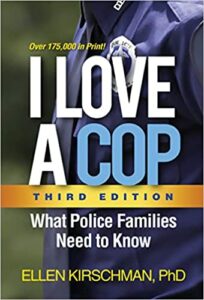
I Love a Cop, Third Edition: What Police Families Need to Know.
Police families are brave, resilient, and proud–and they face remarkable challenges, sometimes on a daily basis. This is the resource that cops and their loved ones have relied on for decades. It gives you practical ways to manage the stress of the job and create a healthy, supportive home environment. The third edition features new stories from police families, two new chapters, and fully updated resources. Dr. Ellen Kirschman acknowledges the tough realities of life on the force. She offers suggestions for handling everyday relationship dilemmas as well as serious issues like trauma, domestic violence, and alcohol abuse.
Amazon
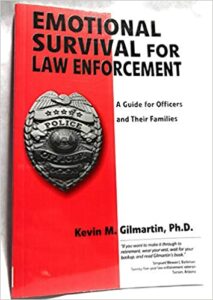
Emotional Survival for Law Enforcement: A guide for officers and their families.
This book addresses dynamics that can transform law enforcement officers into cynical, angry individuals. It points out how officers develop a social perceptual set that can cause them to engage in inappropriate behavior patterns. The goal is to provide information to prevent the deterioration process and negative emotional impact.
Amazon
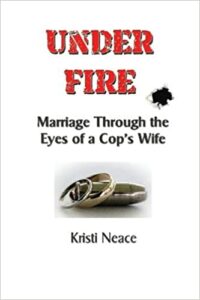
Under Fire: Marriage Through the Eyes of a Cop’s Wife.
Kristi Neace brings to the forefront stresses not uncommon in a law enforcement marriage. Lack of communication, rotating shifts, job stress, missed special occasions, fatigue, cynicism, alcoholism are problems that can plague a marriage. Without finding the “glue” to hold your relationship together, the odds are not favorable. Yet, there is hope! Marriages do survive and can thrive with the proper tools in place. When your marriage comes under fire – be bullet proof!
Police Families Police Books
Amazon
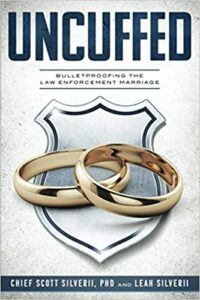
Uncuffed: Bulletproofing the Law Enforcement Marriage.
Marriage can be tough, but being married to a law enforcement professional can be tougher. You can have a rock solid marriage, but it takes work to bulletproof your relationship with marital Kevlar. This book will show you how to succeed in your LEO marriage.
Amazon
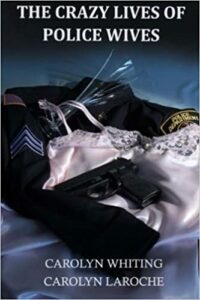
The Crazy Lives of Police Wives.
Our law enforcement husbands are our heroes, and we love them dearly. We wouldn’t trade them for the world, but being a law enforcement officer’s wife has its own set of challenges. Law enforcement wives from across North America share communal advice, wisdom, experience, insight and laughter with fellow LEO wives. We offer a peek into our world, “the heart of the badge,” to our husbands, families, friends and neighbors.
Amazon
Bullets in the Washing Machine.
Author Melissa Littles, Founder of The Police Wife Life, is an advocate for law enforcement officers and their families. Bullets in the Washing Machine is a compilation of short stories and poems. It focuses on seeing the positives through the daily struggles of living a life in Law Enforcement. Melissa wants to encourage those in law enforcement and bring awareness to the general public of the sacrifices and misconceptions.
Children's
Police Books
Amazon
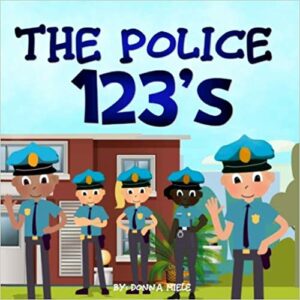
The Police 123’s.
Ten Police Officer’s days have just begun. Countdown as each one has a job to do… until they are left with one!
A great book that combines counting with a fun Police themed story line. Learn about different types of jobs Police Officers do daily!
Ready to see when each officer leaves? Read along to count with The Police 123’s!
Amazon
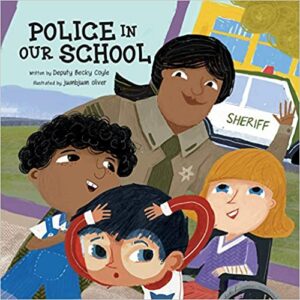
Police in Our School (School Safety).
A School Resource Officer has a diverse role in the school community with many duties and responsibilities. Police in Our School teaches kids the important role their school resource officers play to protect them and their school. Deputy Becky Coyle created this School Safety series to explain the concepts to children in a fun and engaging way.
Amazon
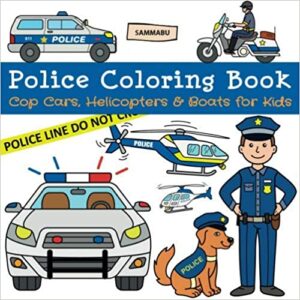
Police Coloring Book: Cop Cars, Helicopters and Boats for Kids.
There are patrol cars, SWAT trucks, motorcycles, helicopters, airplanes, boats and other vehicles. In this coloring book by SAMMABU, kids from 3 to 6 years old find lots of police related motifs.
Children's Police Books
Amazon
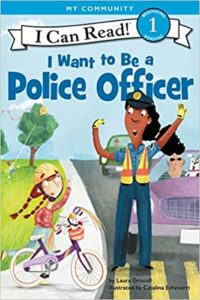
I Want to be a Police Officer
(I Can Read Level 1).
This book is part of a new I Can Read series that introduces young readers to important community helpers. It is perfect for children learning to sound out words and sentences. The short sentences, familiar words, and simple concepts support success for children eager to start reading on their own. Kids ages 3-6 will enjoy finding out more about the people who help all of our communities.
Amazon
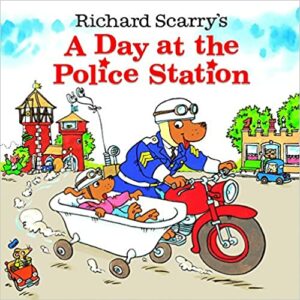
Richard Scarry’s A Day at the Police Station.
It’s time for a ride-along with Busytown’s favorite police officer, Sergeant Murphy! It can be helping Busytown citizens find lost items, handling traffic jams, or teaching the town about safety. Children will love this fun and exciting story from the one and only Richard Scarry. Includes a sheet of stickers!
Amazon
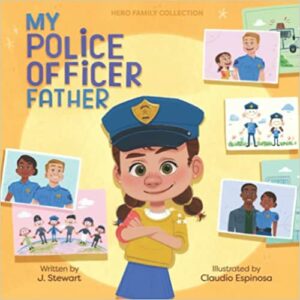
My Police Officer Father.
Oliva finds herself home missing her police officer father while he’s at work. She explores the role he plays in their community through photos and her imagination. Overcome with happiness, Olivia determines her father is a hero and is proud of his role in their community. This colorfully engaging book reinforces the positive work police officers provide while gently illustrating diversity within the law enforcement community.
Police Stories
Police Books
Amazon
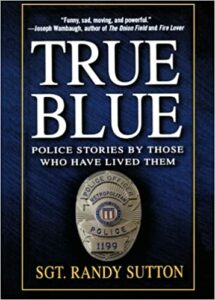
True Blue: Police Stories by Those Who Have Lived Them.
After September 11, 2001 Las Vegas Police Sergeant Randy Sutton solicited writing from law enforcement officers. His goal was to bridge the gap between police and those they serve. He acquired a broad and thoughtful look at the many facets of police life. Hundreds of active and former officers responded from all over the United States. They were men and women from big cities and small towns. Sutton culled the selections into five categories: The Beat, Line of Duty, War Stories, Officer Down, and Ground Zero.
Amazon
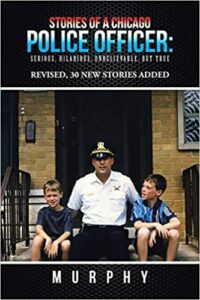
Stories of a Chicago Police Officer: Serious, Hilarious, Unbelievable, but True.
Do we remove the body before the young grandkids show up? It’s against rules, but we can’t allow the children’s last memory of grandpa to be crumpled and bleeding. Is that a gun in his hand, or is that a cell phone? It’s too dark, but the call was a man with a gun! If you’re right you’re a hero. If you’re wrong you go to the morgue. These decisions are made on a daily basis if you are a Chicago police officer. Hopefully, you’re right. If you’re wrong, not only do you suffer, but your family does as well. No police officer wants to make a split second decision, but at times that’s all you have.
Amazon
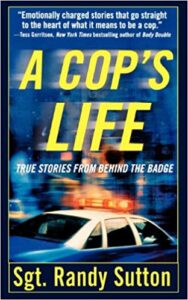
A Cop’s Life: True Stories from the Heart Behind the Badge.
Las Vegas police sergeant Randy Sutton goes beyond the neon into the dark corners of society. He puts us into the driver’s seat of his cruiser, and a job that ricochets from moments of sheer terror to coffee-fueled boredom. There are stops on the way at every conceivable act of human folly and depravity.
Police Stories Police Books
Amazon
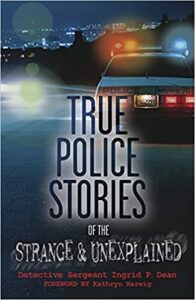
True Police Stories of the Strange & Unexplained.
These are true, first-hand accounts from law enforcement officials across the nation. They reveal how forces beyond our understanding have impacted them in the course of duty. The weird and unexplained experiences in this book take place in the midst of gun battles, rescues and tragedies that police officers face every day. They reveal the inner lives of the men and women behind the badge.
Amazon
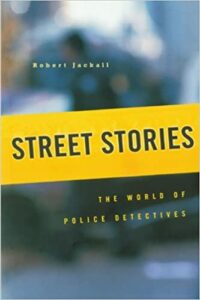
Street Stories: The World of Police Detectives.
Detectives’ interactions in social strata high and low foster cosmopolitan habits of mind and easy conversational skills. They become incomparable storytellers. This book brims with the truth-is-stranger-than-fiction violence of the underworld. It tells about a justice apparatus that splinters knowledge, reduces life-and-death issues to arcane hair-splitting, and makes rationality a bedfellow of absurdity.
Amazon
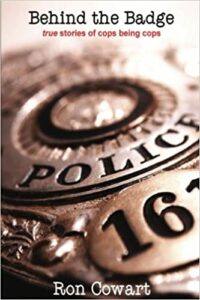
Behind the Badge: True Stories of Cops being Cops.
Cops tend to think and do things differently from the average, everyday citizen. Their sense-of-humor tends to be different as well. Things that may shock the average person are oftentimes considered hilarious by cops. Many agree it’s just one way of coping with what cops are subjected to on a daily basis. But, it also makes for some downright funny stories, not to mention cherished memories
Police Report Writing
Police Books
Amazon
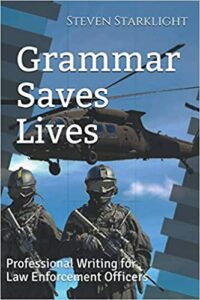
Grammar Saves Lives: Professional Writing for Law Enforcement Officers.
This is a short and concise guide for professional writing. A guide intended for police officers or any type of law enforcement officers. This book will give you a no nonsense education on how to write coherently and with clarity.
Amazon
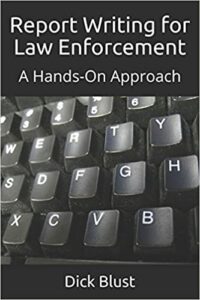
Police Writing for Law Enforcement: A Hands-On Approach.
Using the principles explained here, you’ll learn how to organize your information. The quality of your reports will improve, and you’ll spend less time writing them. These principles are universal, and you’ll be able to apply them to any police writing situation.
Amazon
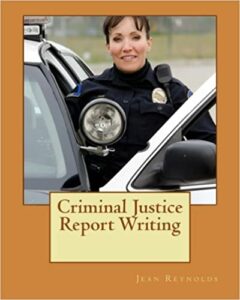
Criminal Justice Report Writing.
Chapter topics include organizing and writing professional reports, sentence skills, bullet style, avoiding usage errors, and the specialized vocabulary. Sample reports are included. Exercises are provided throughout the book. Answer Key allows you to check your progress at each step.
Police Report Writing Police Books
Amazon
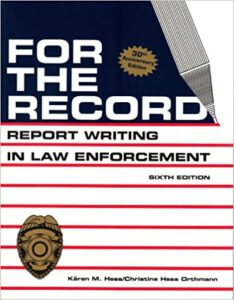
For the Record: Report Writing in Law Enforcement.
This manual offers guidelines for writing at all levels of law enforcement. It provides direction for producing professional reports that reflect positively on the writer. The manual covers principles of clear writing, grammar, spelling and punctuation.
Amazon
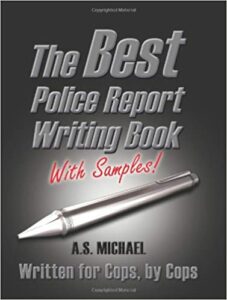
The Best Police Writing Book with Samples.
A revised, professionally developed, easy to use, easy to understand police report writing book. This book is current, relevant, and it will show anyone in law enforcement how to successfully write a police report. You will learn how to document your call from the moment you are assigned that call until you are 10-8.
Amazon
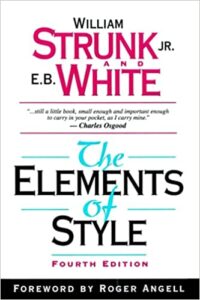
The Elements of Style, Fourth Edition.
You know the authors’ names. You recognize the title. You’ve probably used this book yourself. This is The Elements of Style, the classic style manual, now in a fourth edition. A new Foreword by Roger Angell reminds readers that the advice of Strunk & White is as valuable today as when it was first offered. This book’s unique tone, wit and charm have conveyed the principles of English style to millions of readers.
Forensic Science
Police Books
Amazon
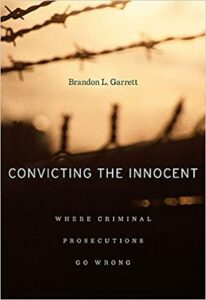
Convicting the Innocent: Where Criminal Prosecutions Go Wrong.
DNA exonerations have shattered confidence in the criminal justice system. DNA has exposed how often the innocent are convicted and the guilty walk free. In this in-depth analysis, Author Brandon Garrett examines what went wrong. He examines the cases of the first 250 wrongfully convicted people to be exonerated by DNA testing.
Amazon
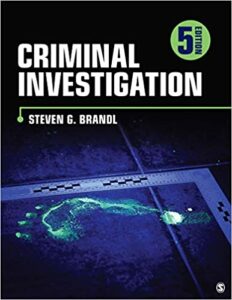
Criminal Investigation, Fifth Edition.
This text offers a comprehensive examination of the criminal investigation process and the vital role criminal evidence plays. It focuses on the five critical areas essential to understanding criminal investigations. They are background and contextual issues, criminal evidence, legal procedures, evidence collection procedures, and forensic science. Author Steve Brandl draws from modern research, actual investigative cases, and real crime scene photos. He provides students practical insights into the field of criminal investigation today.
Amazon
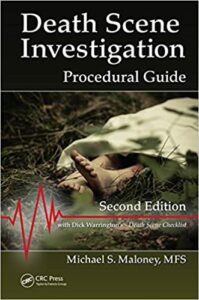
Death Scene Investigation: Procedural Guide, Second Edition.
Those tasked with investigating death scenes come from a variety of backgrounds and varying levels of experience. Whether a homicide detective, crime scene investigator, medico-legal death investigator, coroner or medical examiner. This Procedural Guide provides the investigator best-practice techniques and procedures for almost any death scene imaginable.
Forensic Science Police Books
Amazon
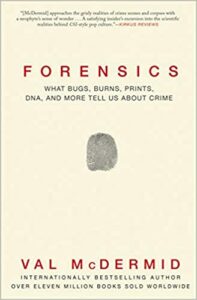
Forensics: What Bugs, Burns, Prints, DNA, and More Tell Us About Crime.
The dead can tell us all about themselves: where they came from, how they lived, how they died and who killed them. The messages left by a corpse, a crime scene, or human traces can unlock the mysteries of the past. In Forensics, Author Val McDermid guides readers through this field, drawing on interviews with top-level professionals, ground-breaking research, and her own experiences.
Amazon
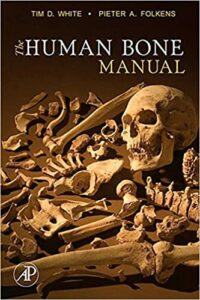
The Human Bone Manual, 1st Edition.
The Human Bone Manual is intended for use outside the laboratory and classroom by professional forensic scientists, anthropologists and researchers. The compact volume includes all the key information needed for identification purposes. It includes hundreds of photographs designed to show a maximum amount of anatomical information.
Amazon
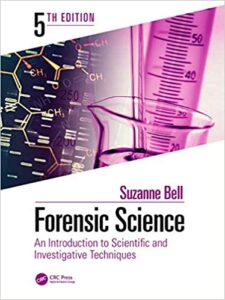
Forensic Science: An Introduction to Scientific and Investigative Techniques, Fifth Edition.
This text incorporates the wisdom of forensic practitioners who discuss the real cases they have investigated. Textboxes in each chapter provide case studies, current events, and advice for career advancement. A brand-new feature, Myths in Forensic Science, highlights the differences between true forensics and popular media fictions. Each chapter begins with an overview and ends with a summary, and key terms, review questions, and up-to-date references. There are more than 350 full-color photos from real cases give students a true-to-life learning experience.
Deadly Force
Police Books
Amazon
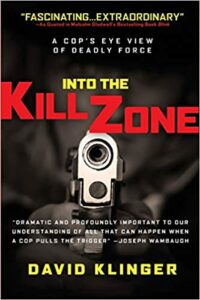
Into the Kill Zone: A Cop’s Eye View of Deadly Force.
What is it like to have the legal sanction to shoot and kill? Written by a cop-turned university professor, David Klinger interviewed scores of officers who have shot people. Into the Kill Zone presents firsthand accounts of the role deadly force plays in American police work.
Amazon
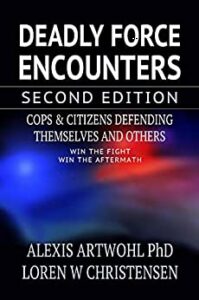
Deadly Force Encounters, Second Edition: Cops and Citizens Defending Themselves and Others.
This book explains how the science of human performance influences the people behind the badge. This knowledge is crucial for physical, legal, and emotional survival. Citizens, armed or not, will benefit from the information to help them survive violent threats. “When seconds count, the police are minutes away.” If citizens use deadly force, this book will help them prepare for the legal and emotional challenges of the aftermath.
Amazon
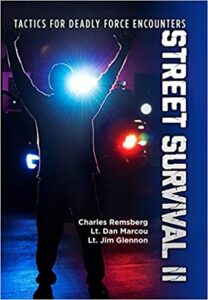
Street Survival II Tactics for Deadly Force Encounters.
The book that could save a police officer’s life, career and lives of the citizens they serve. This update includes more than 200 color photos and diagrams and the profession’s many changes over the past three decades. It includes tactics, effective street communication, and detecting attack indicators. Public expectations, the issues of Guardian and Warrior roles, and preparing for the realities of force events are covered.
Deadly Force Police Books
Amazon
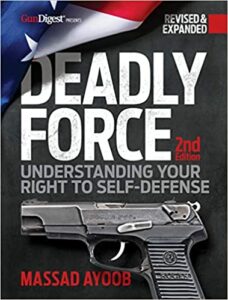
Deadly Force: Understanding Your Right to Self-Defense, 2nd Edition.
When it comes to explaining self-defense law, Massad Ayoob has likely educated more armed citizens than any other author. With his titles, In the Gravest Extreme and Deadly Force, Ayoob has helped hundreds of thousands of law-abiding citizens. He’s helped them understand the serious responsibility that comes with using a firearm to defend themselves and their families.
Amazon
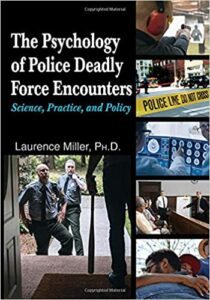
The Psychology of Police Deadly Force Encounters.
This book includes a comprehensive review of the scientific literature in neuropsychology, cognition, personality, and criminology. It examines how these factors relate to the mindset of an officer before, during, and after a deadly force incident. Chapter topics illustrate practical applications of deadly force psychology to agency policy, training curricula and administrative and disciplinary measures.
Amazon
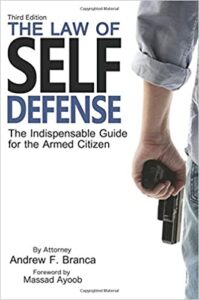
The Law of Self Defense: The Indispensable Guide to the Armed Citizen.
Arm yourself for the legal battle that happens after an attack. The first fight is for your life – the second for your liberty. Andrew F. Branca is an expert in self-defense law. He teaches you how to make quick, effective, legally appropriate decisions in life-and-death situations. His easy-to-understand analysis covers the laws of all fifty states. Key legal principles are illustrated with true life examples of people defending themselves.
Ethics
Police Books
Amazon
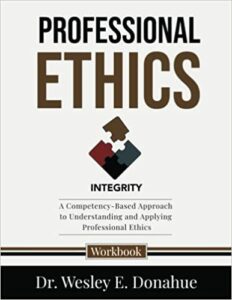
Professional Ethics: A Competency-Based Approach to Understanding and Applying Professional Ethics.
Ethics are a guide that people use to ensure their behavior is morally right. Ethical behavior is often defined as something that benefits the greater good and helps people avoid hurting others. This workbook describes the value of ethics, the dangers of unethical actions, and the business benefits of ethical behavior.
Amazon
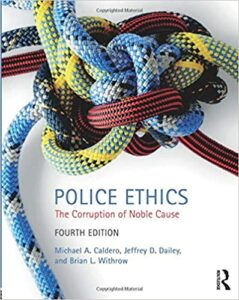
Police Ethics: The Corruption of Noble Cause 4th Edition.
The authors argue that the noble cause is a commitment to “doing something about bad people.” Therefore, it is a central “ends-based” police ethic. This book is about the power that police use to do their work. It examines how that power can lead police to abuse their positions at the individual and organizational levels. Police Ethics provides a realistic understanding of the problems confronted in police work.
Amazon
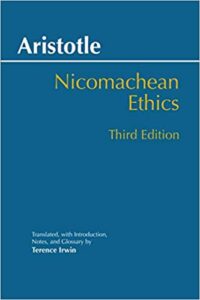
Nicomachean Ethics Third Edition.
Terence Irwin’s edition of Nicomachean Ethics offers more aids to the reader than are found in any modern English translation. It includes an Introduction, headings to help the reader follow the argument and explanatory notes on difficult or important passages. The book has a full glossary explaining Aristotle’s technical terms.
Ethics Police Books
Amazon
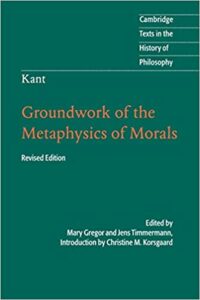
Groundwork of the Metaphysics of Morals.
Published in 1785, Immanuel Kant’s Groundwork of the Metaphysics of Morals ranks alongside Plato’s Republic and Aristotle’s Nicomachean Ethics. Its aim is to identify and corroborate the supreme principle of morality, the categorical imperative. Kant argues that human beings are ends in themselves, never to be used by anyone merely as a means.
Amazon
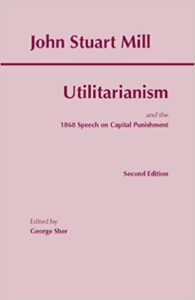
Utilitarianism Second Edition.
This edition of John Stuart Mill’s Utilitarianism includes the text of his 1868 speech to the British House of Commons. In that speech, he defended the use of capital punishment in cases of aggravated murder. The speech is significant for two reasons. Its topic remains timely, and its arguments illustrate the applicability of utility to questions of large-scale social policy.
Amazon
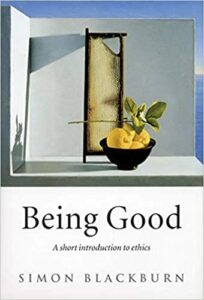
Being Good: A Short Introduction to Ethics 2nd Edition.
Simon Blackburn examines ethics by highlighting the issues that spring from the question of how we ought to live. Blackburn dissects the reasons why we are skeptical about ethics. He draws on examples from history, politics, religion and everyday personal experience. Blackburn shows how cynicism and self-consciousness can paralyze us into considering ethics a hopeless pursuit.
Criminal Justice Careers
Police Books
Amazon
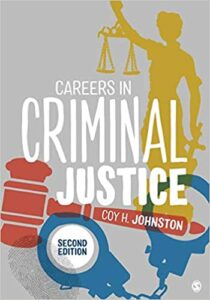
Careers in Criminal Justice, Second Edition.
This book is designed to aid your career goals―from conception through the hiring process. It covers of over forty careers in policing, courts, corrections, and victim services. Self-assessment tools enhance your self-awareness and steer you toward realistic and suitable careers in criminal justice.
Amazon
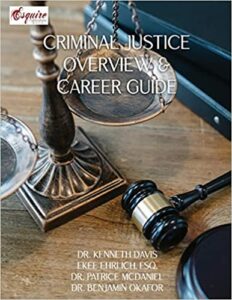
Criminal Justice Overview and Career Guide.
This book provides an overview of the criminal justice system and career opportunities. The authors are scholar-practitioners with decades of experience on each topic. Topics covered include Law Enforcement, Emergency Management, Corrections, Law, and Research.
Amazon
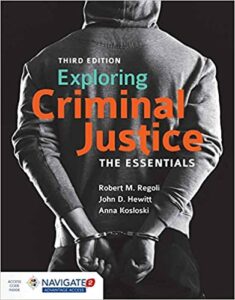
Exploring Criminal Justice: The Essentials 3rd Edition.
This text covers the foundational concepts of criminal law and the justice system and how people and processes interact. It features statistics and data, contemporary court cases and case studies, and updated references for all topics. Understand the relationship between law enforcement, corrections, law, policy making and administration, the juvenile justice system, and the courts.
Criminal Justice Careers Police Books
Amazon
Career Guide in Criminal Justice Illustrated Edition.
This book is the guide to getting hired and working in the criminal justice system. It covers the three main components of the criminal justice system–law enforcement, courts, and corrections. It discusses career opportunities in local, state, and federal government along with those in the private sector. The book examines careers in private investigations, the bond industry, forensic psychology, cybersecurity, and other related fields.
Amazon
CRIMINAL JUSTICE: An Overview of the System.
This book provides the introductory student a concise and balanced introduction to the workings of the legal system. It covers policing, courts, corrections, and juvenile justice. Six chapters, each divided into five sections, provide a consistent framework for ease of instructional design.
Amazon
Careers in Criminal Justice and Related Fields: From Internship to Promotion 6th Edition.
This book is a resource for both readers planning to enter the criminal justice field and for those already working in the field. It provides guidance for professional development, job change, or promotional advancement.
Infamous Criminals
Police Books
Amazon
Mindhunter.
Discover the classic, behind-the-scenes chronicle of John E. Douglas’ twenty-five-year career in the FBI Investigative Support Unit. He used psychological profiling to delve into the minds of the country’s most notorious serial killers and criminals. In chilling detail, the Mindhunter takes us behind the scenes of some of his most gruesome, fascinating, and challenging cases.
Amazon
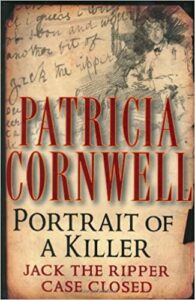
Portrait of a Killer: Jack The Ripper — Case Closed.
The best-selling novelist, Patricia Cornwell, turns her attention to the real-life, century-old series of crimes that terrorized London in the 1880s. Cornwell draws on meticulous research and state-of-the art forensic science to reveal the true identity of the infamous Jack the Ripper.
Amazon
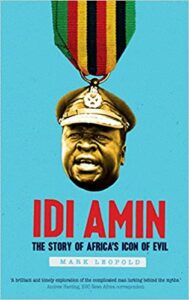
Idi Amin: The Story of Africa’s Icon of Evil.
Idi Amin began his career in the British army in colonial Uganda. He worked his way up the ranks before seizing power in a British-backed coup in 1971. Amin built a violent and unstable dictatorship, and he ruthlessly eliminated perceived enemies. He expelled Uganda’s Asian population as the country plunged into social and economic chaos.
Infamous Criminals Police Books
Amazon
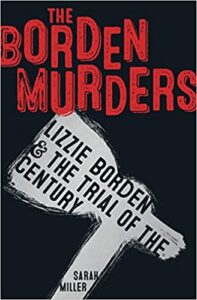
The Borden Murders: Lizzie Borden and the Trial of the Century.
Lizzie Borden took an axe, gave her mother forty whacks. When she saw what she had done, she gave her father forty-one.
Author Sarah Miller takes readers along as she investigates a brutal crime. The crime: the August 4, 1892, murders of wealthy and prominent Andrew and Abby Borden. The accused: mild-mannered and highly respected Lizzie Borden, daughter of Andrew and stepdaughter of Abby. Most of what is known about Lizzie’s arrest and subsequent acquittal comes from newspaper reports. Miller sorts fact from fiction, and a portrait of a woman and a town emerges.
Amazon
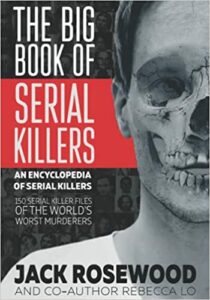
The Big Book of Serial Killers ( An Encyclopedia of Serial Killers.
These serial killers are not mythical beasts with horns and shaggy hair. They are people living among society, going about their day to day activities until nightfall. They are the Dennis Rader’s, the fathers, husbands, church going members of the community. This A-Z encyclopedia of 150 serial killers is the ideal reference book. Included are the most famous true crime serial killers, like Jeffrey Dahmer, John Wayne Gacy, and Richard Ramirez.
Amazon
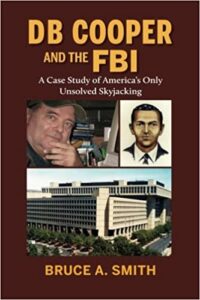
DB Cooper and the FBI: A Case Study of America’s Only Unsolved Skyjacking.
In 1971, a man known as DB Cooper hijacked a Northwest Orient airliner flying from Portland, Oregon to Seattle, Washington. After exchanging the passengers for $200,000 and four parachutes, Cooper instructed the pilots to fly him to “anywhere in Mexico.” A few minutes after take-off, he lowered the aft staircase and jumped into the night skies north of Portland. He has never been seen since, and his identity is still unknown.
Police Books
Police Procedural Authors
David Baldacci
(Amazon) David Baldacci (ad). David published his first novel, ABSOLUTE POWER, in 1996. A feature film followed with Clint Eastwood as its director and star. David has published 44 novels for adults, and all have been national and international bestsellers. Several have been adapted for film and television. His novels have been translated into over 45 languages and sold in more than 80 countries. One hundred and fifty million copies have been sold worldwide. David has also published seven novels for younger readers.
John Barlow
(Amazon) John Barlow (ad). John’s fiction and non-fiction has been published in the UK, US, Australia, Russia, Italy, Germany, Spain and Poland. His new crime series features English-Sicilian detective Joe Romano, and it is set in the north of England. The first novel in the series is RIGHT TO KILL, and the second is TO THE GRAVE. Apart from writing fiction, John has worked as a ghost writer, journalist and translator. He has written for the Washington Post, Slate.com, and the Philadelphia Inquirer.
C. J. Box
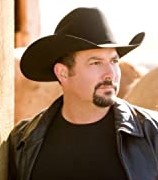
(Amazon) C. J. Box (ad). C.J. is a #1 New York Times bestselling author of over twenty-two novels. He won the Edgar Alan Poe Award for Best Novel Blue Heaven as well as the Anthony Award, Prix Calibre 38 (France). The novels have been translated into 27 languages. Open Season, Blue Heaven, Nowhere To Run, and The Highway have been optioned for film and television. Box is a Wyoming native, and he’s worked as a ranch hand, surveyor, fishing guide, a small town newspaper reporter and editor. Millions of copies of his novels have been sold in the U.S. alone.
Procedural Police Books Authors
Jennifer Chase
(Amazon) Jennifer Chase (ad). Jennifer is a multi-award winning best-selling crime fiction author, and she’s a consulting criminologist. She holds a bachelor degree in police forensics and a master’s degree in criminology & criminal justice. These academic pursuits developed from her curiosity about the criminal mind and from her own experience with a violent psychopath. Jennifer holds certifications in serial crime and criminal profiling. She’s an affiliate member of the International Association of Forensic Criminologists, and member of the International Thriller Writers.
Ann Cleeves
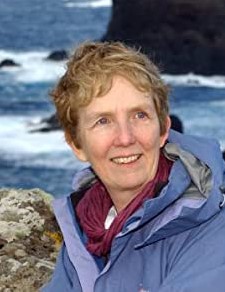
(Amazon) Ann Cleeves (ad). Ann’s DI Vera Stanhope series of books is set in Northumberland. The series features the well-loved detective along with her partner Joe Ashworth. Ann’s Shetland series bring us DI Jimmy Perez, investigating in the mysterious, dark, and beautiful Shetland Islands. Her books have been translated into sixteen languages, and she’s a bestseller in Scandinavia and Germany. Her novels sell widely and to critical acclaim in the United States. Raven Black was shortlisted for the Martin Beck award for best translated crime novel in Sweden in 2000.
Michael Connelly
(Amazon) Michael Connelly (ad). Michael is the bestselling author of over thirty novels, and one work of nonfiction. Over eighty million copies of his books sold worldwide, and they’ve been translated into forty-five foreign languages. He’s one of the most successful writers working today. Connelly is a former newspaper reporter who worked the crime beat at the Los Angeles Times and the Fort Lauderdale Sun-Sentinel. He’s won numerous awards for his journalism and his fiction. His first novel, The Black Echo, won the prestigious Mystery Writers of America Edgar Award for Best First Novel in 1992. In 2002, Clint Eastwood directed and starred in the movie adaptation of Connelly’s 1998 novel, Blood Work.
Procedural Police Books Authors
Robert Dugoni
(Amazon) Robert Dugoni (ad). Robert is the critically acclaimed author of the Tracy Crosswhite police series set in Seattle. The series has sold more than 8 million books worldwide. He is also the author of The Charles Jenkins espionage series, and the David Sloane legal thriller series. Robert has authored several stand-alone novels including The 7th Canon and Damage Control. His books are sold in more than twenty-five countries, and they’ve been translated into more than thirty languages.
Kendra Elliot
(Amazon) Kendra Elliot (ad). Kendra has sold eleven million books. She’s hit the Wall Street Journal top ten bestseller list more than a dozen times. Kendra is a three time winner of the Daphne du Maurier award. She’s an International Thriller Writers’ finalist and a Romantic Times finalist. Kendra grew up in the Pacific Northwest, but she now spends her time on a warm beach wearing flip flops.
Alice Feeney
(Amazon) Alice Feeney (ad). Alice is a New York Times bestselling author, and her books have been translated into over twenty-five languages. Some have been optioned for major screen adaptations. Rock Paper Scissors is being made into a TV series by the producer of The Crown. Alice was a BBC journalist for fifteen years, and she now lives in Devon with her family. Daisy Darker is her fifth novel.
Procedural Police Books Authors
Helen Fields
(Amazon) Helen Fields (ad). Helen is an international and Amazon #1 best-selling author, and she is a former criminal barrister. Every book in the Callanach series has claimed an Amazon #1 bestseller flag. The last book in the series, Perfect Kill, was longlisted for Crime Writers Association Ian Fleming Steel Dagger in 2020. Other titles have been longlisted for the McIlvanney Prize, Scottish crime novel of the year. Helen also writes as HS Chandler, and she has released legal thriller Degrees of Guilt. Her audio book Perfect Crime knocked Michelle Obama off the #1 spot. In 2020 Perfect Remains was shortlisted for the Bronze Bat, Dutch debut crime novel of the year.
Tess Gerritsen
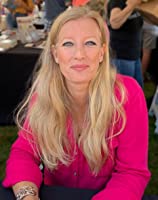
(Amazon) Tess Gerritsen (ad). Tess is an International bestselling author. She took an unusual route to a writing career. A graduate of Stanford University, Tess went on to medical school at the University of California where she was awarded her M.D. She has won both the Nero Wolfe Award for Vanish and the Rita Award for The Surgeon. A series of her novels features homicide detective Jane Rizzoli and medical examiner Maura Isles. That series inspired the TNT television series “Rizzoli & Isles” starring Angie Harmon and Sasha Alexander.
Sue Grafton
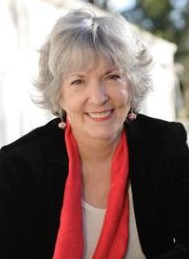
(Amazon) Sue Grafton (ad). Sue is a New York Times bestselling author. She’s published in twenty-eight countries and twenty-six languages–including Estonian, Bulgarian, and Indonesian. Books in her alphabet series, begun in 1982, are international bestsellers with readership in the millions. Like Raymond Chandler and Ross Macdonald, Grafton has earned new respect for the mystery form. Readers appreciate her style, eye for detail, her character development, and her social observances. Sue has been named a Grand Master by the Mystery Writers of America, and she’s a recipient of the Ross Macdonald Literary Award.
Procedural Police Books Authors
Elly Griffiths
(Amazon) Elly Griffiths (ad). Elly is the author of two crime series, the Dr. Ruth Galloway books and the Brighton Mysteries. She also published a stand-alone, The Stranger Diaries, and a children’s book, A Girl Called Justice. Elly has previously written books under her real name, Domenica de Rosa. She acknowledges that her real name sounds more made-up than her pen name. The Ruth Galloway books are set in Norfolk that Elly knows well from childhood. A chance remark from her husband gave Elly the idea for the series. “In that moment,” she says, “I saw Dr. Ruth Galloway walking toward me out of the mist.
Greg Iles
(Amazon) Greg Iles (ad). Greg spent most of his youth in Natchez, Mississippi, and he graduated from Ole Miss in 1983. His thirteen New York Times bestselling novels have been made into films and translated into more than twenty languages. His books have been published in more than thirty-five countries worldwide. He lives in Natchez with his two teenage children. Greg’s latest novel is Southern Man: A Novel (Penn Cage Book 7).
Faye Kellerman
(Amazon) Faye Kellerman (ad). Faye is the author of twenty-six novels, including nineteen New York Times bestselling mysteries. Her novels feature the husband-and-wife team of Peter Decker and Rina Lazarus. Faye has also penned two best selling short novels with her husband, New York Times bestselling author Jonathan Kellerman. She’s also teamed up with her daughter, Aliza, to co-write a teen novel, entitled PRISM. Faye lives in Los Angeles, California, and Santa Fe, New Mexico. Some of Faye’s titles include The Theory of Death; The Hunt; Lost Boys; Walking Shadows; and The Ritual Bath.
Procedural Police Books Authors
Henning Mankell
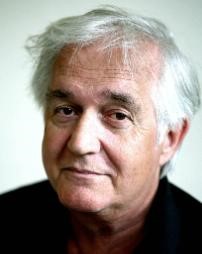
(Amazon) Henning Mankell (ad). Henning became a worldwide phenomenon with his crime writing, gripping thrillers and atmospheric novels set in Africa. His prize-winning and critically acclaimed Inspector Wallander Mysteries have featured in bestseller lists all over the globe. Henning’s books have been translated into over forty languages and made into numerous international film and television adaptations. Henning Mankell was born in Stockholm in 1948. He wrote a number of articles on his battle with cancer until his death in October 2015.
Victor Methos
(Amazon) Victor Methos (ad). At the age of thirteen, Victor’s best friend was interrogated by police for over eight hours. The friend confessed to a crime he didn’t commit, and that’s when Victor knew he’d become a lawyer. Victor honed his skills as a prosecutor, before he would found his own criminal defense firm. One of his cases became the basis for his first major bestseller, The Neon Lawyer. Since that time, Victor has focused his work on legal thrillers and mysteries. He earned a Harper Lee Prize for The Hallows and an Edgar nomination for Best Novel for A Gambler’s Jury.
Jo Nesbo
(Amazon) Jo Nesbo (ad). Jo is one of the world’s bestselling crime writers. Titles include The Leopard, Phantom, Police, The Son and his latest Harry Hole novel, The Thirst. All have topped the Sunday Times bestseller charts. He’s an international number one bestseller, and his books are published in 50 languages, selling over 33 million copies worldwide.
Procedural Police Books Authors
Mike Omer
(Amazon) Mike Omer (ad). Mike is the author of the Zoe Bentley Mystery Series and the Glenmore Park Mystery Series. In the past, he’s been a journalist, a game developer, and the CEO of the company Loadingames. He’s married to a woman who forces him to live his dream, and he is the father of an angel, a pixie, and a gremlin. Mike loves to write about true-to-life people who are perpetrators or victims of crimes. He likes writing funny stuff, and he mixes these two loves into his mystery books.
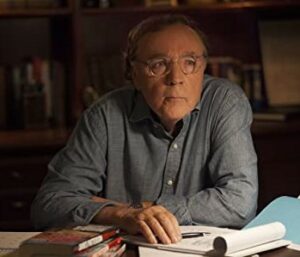
James Patterson
(Amazon) James Patterson (ad). James is one of the best-known and biggest-selling writers of all time. His books have sold in excess of 375 million copies worldwide. He is the author of some of the most popular series of the past two decades – the Alex Cross, Women’s Murder Club, Detective Michael Bennett and Private novels. He has written many other number one bestsellers including romance novels and stand-alone thrillers.
Louise Penny
(Amazon) Louise Penny (ad). Louise is the #1 New York Times and Globe and Mail bestselling author of the Chief Inspector Armand Gamache novels. She has won numerous awards, including a CWA Dagger and the Agatha Award (five times). Louise was a finalist for the Edgar Award for Best Novel. She lives in a small village south of Montréal.
Procedural Police Books Authors
Lisa Regan
(Amazon) Lisa Regan (ad). Lisa is the USA Today and Wall Street Journal bestselling author of the Detective Josie Quinn series. She is a member of Sisters In Crime, International Thriller Writers, and Mystery Writers of America. Lisa has a Bachelor’s Degree in English and Master of Education Degree from Bloomsburg University. She lives near Philadelphia, Pennsylvania in the U.S. with her husband, daughter, and Boston Terrier named Mr. Phillip.
Nora Roberts
(Amazon) Nora Roberts (ad). Nora is the #1 New York Times bestselling author of more than 200 novels. They include Shelter in Place, Year One, Come Sundown, and many more. She is the author of the bestselling In Death series written under the pen name J.D. Robb. The In Death series contains 54 books to date. There are more than five hundred million copies of her books in print.
John Sandford
(Amazon) John Sandford (ad). John Sandford is the pseudonym for the Pulitzer Prize-winning journalist John Camp. As a Civil War buff, John chose the name Sandford after his paternal great-grandfather, Henry Sandford. Henry fought with the Belle city Rifles, part of the Union Army’s Iron Brigade. John is the author of the Prey novels, the Kidd novels, the Virgil Flowers novels, and six other books.
Procedural Police Books Authors
J. Todd Scott
(Amazon) J. Todd Scott (ad). Todd was born in rural Kentucky, and he attended college and law school in Virginia. He set aside an early ambition to write to pursue a career as a federal agent. His assignments have taken him all over the U.S and the world. However, a gun and a badge never replaced his passion for stories and writing. His previous books include The Far Empty, High White Sun, and This Side of Night in the Chris Cherry/Big Bend Series. When he’s not hunting down bad men, he’s hard at work on his next book.
Karin Slaughter
(Amazon) Karin Slaughter (ad). Karin is one of the world’s most acclaimed storytellers. Her books are published in 120 countries with more than 35 million copies sold worldwide. Karin’s 21 novels include the Grant County and Will Trent books. She is the author of the Edgar nominated COP TOWN and the NYT bestsellers PRETTY GIRLS, THE GOOD DAUGHTER, and PIECES OF HER. Karin is the founder of the Save the Libraries project. It’s a nonprofit organization established to support libraries and library programming.
Joseph Wambaugh
(Amazon) Joseph Wambaugh (ad). Joseph is a former LAPD detective sergeant, and he is the bestselling author of eighteen prior works of fiction and nonfiction. Tim Rutten of the Los Angeles Times said, “Joseph Wambaugh is one of those Los Angeles authors whose popular success always has overshadowed his importance as a writer. Wambaugh is an important writer not simply because he’s ambitious and technically accomplished, but also because he ‘owns’ a critical slice of L.A.’s literary real estate: the Los Angeles Police Department…” Wambaugh still prefers the company of police officers, and he interviews hundreds of them for story material.
True Crime Authors
Police Books
Ryan Becker
(Amazon) Ryan Becker (ad). Ryan is a True Crime author who started his writing journey in late 2016. Like most of you, he loves to explore the process of how individuals turn their darkest fantasies into a reality. Ryan has always had a passion for storytelling. So, writing is the best output for him to combine his fascination with psychology and true crime. It is Ryan’s goal for his readers to experience the full immersion with the dark reality of the world just like how he did in his younger days.
Bill Browder
(Amazon) Bill Browder (ad). Bill is the founder and CEO of Hermitage Capital Management. It was the largest foreign investor in Russia until 2005. Browder began a campaign to expose Russia’s corruption and human rights abuses. He began his mission after the death of his lawyer, Sergei Magnitsky, in 2009. Magnitsky was murdered in prison after uncovering a $230 million fraud committed by Russian government officials.
John Glatt
(Amazon) John Glatt (ad). John is an investigative journalist, and he’s written 25 true crime books and 5 biographies. He has two million books currently in print, and he is acknowledged as one of the best true crime writers. John’s first true crime book was For I Have Sinned: True Stories of Clergy Who Kill. He writes true crime for St. Martin’s Press True Crime Library, establishing him as a master of the genre.
True Crime Police Books Authors
Ryan Green
(Amazon) Ryan Green (ad). Ryan is a True Crime author, and he lives in Herefordshire, England. He is fascinated with history, psychology and true crime. In 2015, he started researching and writing his own work, and he released his first book on Britain’s most notorious serial killer, Harold Shipman. He has written several books on lesser known subjects, and he’s taken the approach of writing from the killer’s perspective. Ryan narrates some of the most chilling scenes you’ll encounter in the True Crime genre.
Shanna Hogan
(Amazon) Shanna Hogan (ad). Shanna is an award-winning journalist and New York Times bestselling author of four true crime books. She’s written for numerous publications, and she’s received more than twenty awards for her feature writing and investigative reporting. Shanna was named Journalist of the Year by the Arizona Press Club in 2010. In 2011, she received the same recognition by the Arizona Newspaper Association. Shanna’s first book, Picture Perfect: The Jodi Arias Story: A Beautiful Photographer, Her Mormon Lover, and a Brutal Murder, was published in 2013. She has subsequently published The Stranger She Loved; Secrets of a Marine’s Wife and Dancing with Death.
True Crime Police Books Authors
Jason Neal
(Amazon) Jason Neal (ad). Jason is a Best-Selling American True Crime author living in Hawaii. He wrote his first true crime collection in 2019, and he has written more than a dozen case histories. Jason assembled stories of crimes that fascinated him the most throughout his life. He’s especially obsessed by cases solved by sheer luck; amazing police work, and ground breaking technology. Jason’s interested in early DNA cases and reverse genealogy.
Ben Oakley
(Amazon) Ben Oakley (ad). Ben is a bestselling True Crime author, researcher, publisher, blogger, and mental health advocate from Camden, England. When he’s not writing, Ben dedicates his time to the prevention of male self-harm and suicide, and he provides victim support and awareness. He’s a fitness fanatic, DVD collector, and wannabe astronaut at all other times. Ben says he’s usually found on Twitter or in the bars and parks of Camden. Agathokakological is his favourite word!
Jack Olsen
(Amazon) Jack Olsen (ad). Jack has been described as “the dean of True Crime authors” by the Washington Post and the New York Daily News. The Detroit Free Press and Newsday say he’s “the master of true crime,” and Publishers Weekly called him “the best true crime writer around.” His studies of crime are required reading in university criminology courses, and they’ve been cited in the New York Times Notable Books of the Year. In a page-one review, the Times described his work as “a genuine contribution to criminology and journalism alike.”
True Crime Police Books Authors
Jack Rosewood
(Amazon) Jack Rosewood (ad). Jack has pursued his dream job as a full-time author, and he’s loved every second of it. He’s the son of a crime journalist. Jack grew up fascinated by the stories of criminals and serial killers his father would tell. Those stories inspired Jack to pick up the pen and create his own tales of murder and madness.