



Justice without truth is a perversion of the rule of law, but your stubborn allegiance to truth will prevail.
~ Barry M. Baker Tweet
Rule of law is a phrase that embodies all that is necessary for a free, fair and functioning society, and police officers are its defenders. Would you be surprised to learn that there are more lawyers in the United States than sworn police officers? That’s not a bad thing, because laws affect everyone to one degree or another.
Every civilization needs a code of conduct created and codified to ensure equal justice across all levels of society. Legislating laws is no easy task, but democratic societies do a better job than those ruled by autocrats. An autocrat’s rule of law may be more efficient, but it always leads to more injustice than justice.
Here’s where things get complicated. Most laws addressing criminal conduct are written in a clear and concise manner. You don’t have to be a lawyer to comprehend these laws; unless, you are a lawyer.
“People whose profession it is to disguise matters.”
Interpretation of a rule of law is one thing, but its application is another matter. A good defense lawyer will exploit every weakness you present. Most of your cases will be concluded within your preliminary investigation, and any arrests will be based on probable cause. Your probable cause will be documented in your statement of probable cause.
Probable cause confounds a lot of police officers, because probable cause does not require evidence beyond a reasonable doubt. You can arrest a person with just enough evidence that the person probably committed the crime. The lesser standard comports with the rule of law, but it presents the defense lawyer many advantages. A probable cause statement should present the higher standard of beyond a reasonable doubt.
The defense lawyer will read your statement of probable cause prior to trial. That reading will determine if the defendant proceeds to trial or seeks a plea bargain from the prosecutor. A lawyer will always go to trial if you’re perceived as vulnerable. Submitting a thorough statement shows that you understand the rule of law, and you won’t be prone to manipulation.
Your goal should be to avoid jury trials, because they are unpredictable. It doesn’t matter how much or how strong evidence is against the defendant. The jury is the rule of law, and the jury can acquit a defendant for any reason. A trial judge can set aside a guilty verdict that is demonstrably unfair, but a jury’s not-guilty verdict is sacrosanct. This too is not a bad thing, because America’s criminal justice system treats the accused fairer than most.
“A jury consists of twelve persons chosen to decide who has the better lawyer.”
The plea bargain gets a bad rap, because many believe criminals can escape justice by bargaining for lesser punishment. It’s true the plea bargain results in lesser punishment than might be achieved through a jury trial. But, the operative word is – might. The plea bargain will ensure punishment, and it is compatible with the rule of law. The plea bargain has an additional advantage. It requires a guilty plea by the defendant, and that ends the appeal process finalizing the criminal justice process.
You may see defendants given considerations because of who they are, and that should give you cause to evaluate your own powers of discretion.
“No man is above the law and no man is below it; nor do we ask any man’s permission when we ask him to obey it.”
Theodore Roosevelt was never a lawyer which is probably why he was a strong proponent for the rule of law. He did enter Columbia Law School, but he dropped out after the first year. You’ll exercise discretion, but the beneficiaries of your discretion should never receive your mercy because of “who” they are.
There’s a somewhat vulgar cliché regarding opinions. Ironically, opinion is a word frequently associated with courts and the rule of law.
“Opinion is the medium between knowledge and ignorance.”
Police officers occupy a unique position within the criminal justice system, because your opinions need not affect your conduct. Your most important mission is the pursuit of facts without regard for any preconceived outcome. Justice without truth is a perversion of the rule of law, but your stubborn allegiance to truth will prevail.
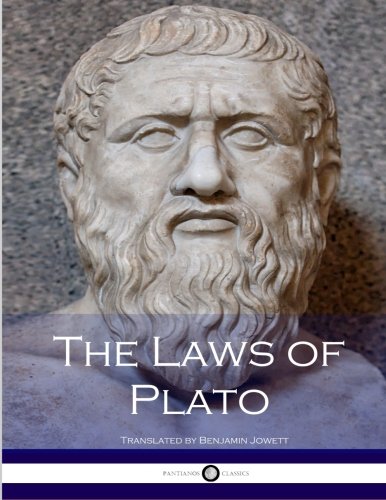
“The Laws is Plato’s last, longest, and, perhaps, most loathed work. The book is a conversation on political philosophy between three elderly men: an unnamed Athenian, a Spartan named Megillus, and a Cretan named Clinias. These men work to create a constitution for Magnesia, a new Cretan colony. The government of Magnesia is a mixture of democratic and authoritarian principles that aim at making all of its citizens happy and virtuous.” Continue reading at Internet Encyclopedia of Philosophy – A Peer Reviewed Academic Resource.
Advertisements
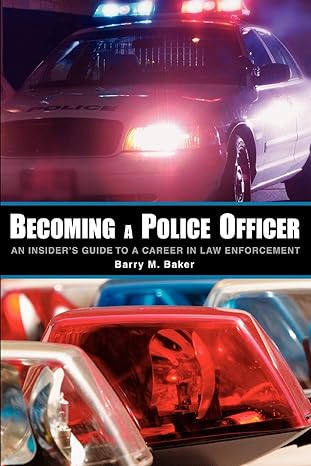
An Insider's Guide to a Career in Law Enforcement by Barry M. Baker

Find schools and get information on the program that’s right for you.
Powered by Campus Explorer
CareerPoliceOfficer earns commission on qualifying purchases from these affiliate partners: