Defense attorneys will always attack eyewitness identifications by any means available to them; however, it is ultimately up to a judge or jury to determine the accuracy of eyewitness identification.
~ Barry M. Baker Tweet
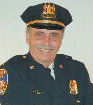
Detective Lieutenant Barry M. Baker (ret.) is a 32 year veteran of the Baltimore Police Department.

Eyewitness identification and testimony is constantly assailed by experts and defense attorneys as being unreliable and biased. If you listen to a lot of the experts, the value of an eyewitness to a crime is a thing of the past. DNA has had a lot to do with the devaluation of eyewitness identification of suspects. From time to time, you’ll hear of an instance where DNA evidence exonerates a person previously convicted of a crime
Defense attorneys will always attack eyewitness identifications by any means available to them; however, it is ultimately up to a judge or jury to determine the accuracy of eyewitness identification. Your job is to you to locate, identify, and isolate an eyewitness to a crime. It will be up to you to ensure that eyewitness identification of a suspect is made free of coercion of any kind.
The Eyewitness is Simply One Building Block
If you’re fortunate to have an eyewitness, that circumstance is simply one building block in your investigation. You should never take the attitude that once you have an eyewitness, you need do no more. Eyewitness identification will always be a critical and convincing factor in your investigations, but you must exhaust all efforts to develop additional evidence to support the eyewitness identification.
I learned very early in my career just how important eyewitness identification can be. However, had it not been for my near presence at the crime scene when the crime occurred, the eyewitness identification would have been useless.
I had been a police officer for less than a year, and I was walking my foot post on E. North Avenue in East Baltimore. It was about ten o’clock on a weeknight, and everything was pretty quiet. Vehicle traffic was light, and there wasn’t a pedestrian in sight. I was about fifty feet from the Firehouse at North Avenue and Bond Street, and I was thinking about stopping inside when the sound of gunfire abruptly altered that idea.
Shots Fired
The first shot got my attention, but I couldn’t immediately detect from what direction the shot came. Only a second passed, and two more shots followed in rapid succession. The gunfire clearly emanated from Bond Street around the northwest corner of the Firehouse. I drew my revolver as I began to cautiously approach the corner of the Firehouse while notifying my dispatcher of the gunfire and my location.
When I was about twenty feet from the corner, two young men came running around that corner. Had I moved more rapidly toward that corner, there’s no doubt they would have collided with me. To say there was shock all around would be an understatement.
I raised my revolver and shouted that universally understood word, “Freeze!” The two men almost stumbled as they tried to slow their forward movement. I immediately detected the expressions of shock and fear in the faces of the men.
They followed my order to place their hands against the front garage door of the Firehouse. They were conversing with each other, but they weren’t talking loud enough for me to hear what they were saying.
I was busy notifying the dispatcher of my situation as several firefighters exited the Firehouse to see what was happening. As I was about to tell the two men to stop talking, I detected movement to my right. I looked to see an elderly woman standing across the street on the southwest corner of Bond Street and E. North Avenue.
They Just Shot My Husband
The expression on the woman’s face clearly showed she was in distress. Before I had a chance to say anything to the woman, she slowly raised her right arm and pointed with her index finger toward the two men. Her forthcoming statement then said it all, “They just shot my husband.”
I immediately turned my full attention to the two men, now suspects, and their body language only added more. As soon as the woman made her statement, both stopped talking and abruptly dropped their heads forward chins to chests. The Firemen were already turning the corner running to aid the woman’s wounded husband.
They quickly located the victim lying at the alley entrance on the west side of Bond Street about forty feet south of the intersection. Their lifesaving efforts were in vain since the victim had been shot through the heart.
Other police officers began arriving on the scene followed by the sector sergeant. In those days the sergeant was God, and he soon had the crime scene secured. He directed officers to knock on every door in the block searching for witnesses. As the primary officer, I remained on the scene; until, everything was completed.
No Physical Evidence
As for evidence this was long before DNA, but DNA wouldn’t have been relevant. The suspect simply shot the victim dead when he refused to hand over his wallet. The only evidence that would ultimately be available was the victim’s wife who was the one and only eyewitness to the murder.
My interview of the wife established that there were a total of three suspects. She told me that only one of the suspects displayed a gun. When her husband refused to give the armed suspect his wallet, the suspect simply began firing. As her husband fell to the pavement, the armed suspect ran westbound in the alley behind E. North Avenue. The other two suspects ran in the opposite direction northeast across Bond Street and onto E. North Avenue where I apprehended them.
The Interrogation
I returned to the station where homicide detectives were interrogating my suspects. About an hour passed before the detectives walked into the squad room and spoke with me. I could sense that all was not going well. As we all got seated, one of the detectives looked at me and sighed, “Officer…we don’t think these guys were involved.”
The detective went on to tell me that neither suspect knew the other, and only one had an arrest record for minor offenses. The suspects told the detectives they were simply walking northbound on the east side of Bond Street when they heard the shots. When I apprehended them, they were simply running away from the gunfire.
Only an Eyewitness and a Problem
I knew I had a problem. Both detectives were competent and experienced. I was a rookie with only months on the job. I had no doubt that both suspects were part of the hold-up team, and now I had to convince these detectives.
– When the suspects turned the corner, they were practically joined at the hip. For two men who didn’t know one another, they must have been walking pretty close together.
– For strangers, they had a lot to say to each other as they leaned against the Firehouse door.
– Neither suspect said a word to me when I accosted them. They should have been eager to tell me there was a man around the corner shooting a gun.
– I described the body language of both suspects when the victim’s wife made her identification. While the suspects’ continued silence could not be used as evidence of guilt, it certainly was unusual.
– I went on to point out that Bond Street was a narrow residential street. With no obstructions between the two men and the gunfire, they could quickly identify the exact source of the gunfire.
If both men were south of the east-west alley, running northbound as they allege wouldn’t much sense. If they were at or north of the alley, they would have exited Bond Street only seconds after the gunfire. While we were only talking about seconds, they should have been rounding that corner even before I began my movement toward the corne
Interrogation Continues and Everything Changes
I urged the detectives to continue their interrogations of the suspects. I could understand the difficulties encountered by the detectives. Both suspects had waived their Miranda rights to counsel, and both suspects were smart enough to stick to a pretty simple premise. They heard gunfire, and they ran. As the detectives returned to their interrogations, I could only hope that I had sufficiently articulated the critical time line which was measured only in seconds.
Thirty minutes passed when the detectives reentered the squad room. Both were smiling and shaking their heads. I had underestimated these guys, but I was glad I had been diplomatic when disagreeing with their initial determination.
Both detectives had returned to their respective interrogations with a little more than they had before, and they made the most of it. Both suspects, who did in fact know each other, eventually confessed to their involvement in the robbery turned murder. They identified the third suspect who actually committed the murder.
The third suspect would eventually be arrested; however, the gun he used in the murder was never recovered. At the time of the crime, the suspect was bearded. When arrested, he was clean shaven. When the victim’s wife viewed the photo line-up, she picked the suspect as the probable suspect, but she could not be certain.
The Shooter was never Prosecuted
Lacking her identification and the absence of any other eyewitness or physical evidence, the third suspect was never prosecuted for the murder he’d committed. The identification by his accomplices was not sufficient for prosecution without corroboration. As for the two accomplices I apprehended, they both took a plea bargain for second-degree murder, and each man was sentenced to a 15 year prison term.
You’re going to be surprised just how honest most people become when it comes to identifying a person accused of committing a crime. If or when you do encounter a victim or eyewitness who purposely attempts to identify an innocent person, the reason(s) for the false identification should be obvious to you.
You’ll definitely encounter victims and eyewitnesses who are reluctant to identify criminal suspects out of fear of retribution. Dealing with the fearful victim or witness is very difficult, because your efforts to calm and reassure them could always be construed as coercion somewhere down the line.
Here’s something you should find interesting. If you have ten eyewitnesses to a crime, you’ll never receive ten identical descriptions of the event. The discrepancies may be minor, but there will always be discrepancies. When the suspect and witnesses are strangers to one another, it’s likely all will not be able to make the identification with absolute certainty. While all the witnesses were certain of what they saw during the event, they will subject their observations to higher standards when identifying a person from a line-up.
Coercing an Eyewitness Identification
I’ve mentioned coercion a couple of times. You must never do anything to influence a victim or witness identification of a suspect. There are a lot of people who feel that if the police officer believes a certain person to be the guilty suspect, that person must be the guilty suspect.
Whenever you show a victim/witness a photo line-up, you should always tell the victim/witness that the suspect may, or may not be, in the photo array. You’ll know pretty quickly if the viewer is going to be able to make a positive identification.
On those occasions when the viewer cannot make a positive identification, it won’t hurt to ask if there’s any photo that looks like the suspect. If the victim/witness indicates one, ask to what degree of certainty the viewer has. If the viewer points to the suspect and replies, “Eighty percent,” that’s what you put in your report. Let’s say the case goes to trial based on other evidence. While testifying, the victim/witness may well be able to positively identify the suspect in the courtroom setting.
The defense will attack the victim/witness based on the photo line-up; however, a jury can easily understand the difference between looking at a photo and a face to face confrontation. If you’d just submitted the line-up with a simple statement indicating that no identification could be made, the jury would never know that the victim/witness took any interest, let alone an eighty percent interest, in the suspect’s photo during the viewing.
Eyewitness Identification is Either Positive or it’s Not
Now…that can go the other way as well. The viewer could point to one of the fill-in photos as looking most like the suspect. I mention this because it did happen to me a couple of times. No matter, you still record that information in your reporting. Remember, all the photos are going to look very similar, because that’s the purpose of a fair and impartial photo line-up.
Never forget that you’re the truth seeker. Victims and witnesses will be positive in their identification of suspects, or they won’t be positive. They may be almost positive, and it’s perfectly acceptable and required to report that fact. However, you must never attempt to convince a victim/witness, either by overt or subtle means, to make a positive identification.
Related Content for Eyewitness
Advertisements