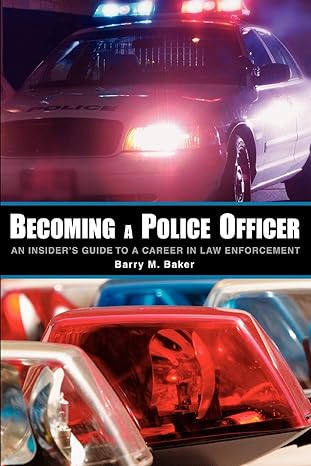
Seven strategies to help you ace reading comprehension questions is an article by Sergeant George Godoy, a retired 22 year police veteran. During his police career, Sergeant Godoy served for 5 years as a police recruitment specialist where he personally tested over 1,000 potential police recruits.

Seven Strategies to Help You Ace Reading Comprehension Questions
by George Godoy
Many law enforcement candidates react to reading comprehension questions by thinking, “This part of the test is going to really slow me down,” and to a degree this part of the test will slow you down. However, if you follow the seven strategies described in this article, you will be able to complete your test at a steady pace and gain valuable points.
Most police entrance exams emphasize reading comprehension. Why? Because, to properly perform their jobs law enforcement officers are expected to understand and comprehend what they read.
Reading comprehension questions will typically be based on one or more situational paragraphs, or they’ll require a candidate to determine the proper course of action to take based on reading police rules and procedures.
First, I would suggest you do a lot of reading before taking the test. Newspaper and magazine articles can improve your concentration, and your ability to understand what you read. Read with purpose. Underscore details and ideas that appear crucial to the meaning of the articles, and identify the writers’ points of view and their supporting information.
When you finish with an article, summarize it. Ask yourself, “What was the author’s purpose in writing the article, and what was the main idea? What was the article’s focus – key information and words?”
Another suggestion is to take practice law enforcement exams. The best practice exams will include reading comprehension sections taken directly from actual exams used by law enforcement agencies.
Seven Strategies
Here are seven strategies proven to help you pass the reading comprehension part of the law enforcement written exam:
1. Skim the answers before reading the passage. This will let you know what to look for while reading. As you read the passage, mark or circle anything that answers a question. Continue reading that passage until you’re done. Don’t answer the question; until, you’ve read the entire passage, because you’ll break your concentration.
2. Ask yourself after you read a paragraph, “What exactly did that paragraph say?” Spend a couple of seconds summarizing the contents of the paragraph. While doing this, look at the paragraph to help you remember where important information is located.
This will save you valuable time
3. Without fail, there will be one or more questions asking you to identify the main idea. Usually a passage will have a few sentences stating the author’s main idea. While reading, underline these sentences. This will save you valuable time.
4. Underline key words, phrases and facts such as dates, names and events.
5. If you are totally confused by a sentence or phrase in the passage, read the sentence before and after the difficult sentence to clarify its meaning. If you’re still confused, move on. Don’t dwell too long, or you’ll lose valuable time.
6. Try to visualize by forming a mental picture of the events described in the passage as you read. When you are able to visualize something, it’s easier to comprehend.
7. Answer the questions based on the information in the passage, not prior knowledge. If you don’t agree with something stated in the passage, this is not the time to argue your point. Remember, your goal is to get the highest score. In this part of the test, you are being tested on your ability to read and comprehend, not your knowledge of the subject.
Do's and Don'ts - Seven Strategies
Do read actively, not passively. Pause briefly after each paragraph to think about the points made by the author. Jot down a brief outline as you go.
Don’t get too concerned with details as you read a passage, especially long passages. Just take notes of where the details were in the passage. You can quickly list statistics, numbers, dates, names, titles, etc.
Do pay attention to the passage structure. Is it organized chronologically, by comparison of two or more arguments, or was there some other classification system? This will help you locate details later.
Do summarize the passage. Take a few seconds to recap the main idea of the passage. This may help you answer several questions quickly.
In summary, if you follow these simple tips and seven strategies, you will find reading comprehension test questions far easier to answer correctly. Remember, read with purpose. By far, the most effective method to help you hone your skills and build your confidence, besides reading newspaper and magazine articles, is to take actual practice exams used by law enforcement agencies.
Related Content for Seven Strategies
Advertisements